Training Tip: When to Work on Collected Lead Departures With Your Horse
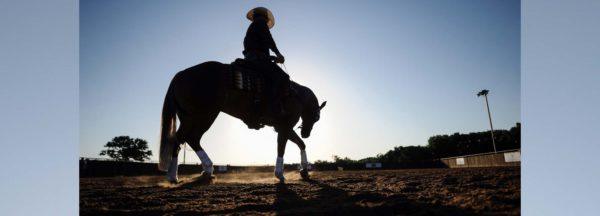
If you want to know how truly broke a horse is, watch him do a lead departure. Horses with no training flip their heads and necks up and pull themselves into the lead with their front legs when asked to canter. Well-trained horses, on the other hand, effortlessly step into the canter while remaining soft to their rider’s aids. There’s nothing prettier than a horse pushing his hip up, softening his face, elevating his shoulders and stepping into a lead using impulsion from his hindquarters. From a practical standpoint, if you can get a great lead departure, half of your work is done for you when it comes to teaching your horse how to do a flying lead change.
Getting a horse to the point in his training where he can do a collected lead departure takes building a solid foundation of basics and consistently working with him. In the Fundamentals level of the Method, we don’t worry much at all about how our horses canter. All we’re looking for is for the horse to pick up the canter when we ask with the calf of our leg and maintain the gait without breaking down to a trot or speeding up to a gallop. We don’t even care at that level which lead he is on.
It’s not until the Intermediate Series that we teach the horse how to pick up the correct lead with the Leads Exercise. But even then, we’re not too concerned about how the horse picks up the lead; we just want him to canter on the correct lead. Horses are intelligent creatures, but they’re simple. They need everything presented to them in small increments that build on one another.
Once you reach the Advanced level with your horse, after you’ve gotten control of all five of his body parts and he’s soft and supple and listens to your cues, that’s when we worry about a pretty, correct lead departure. This is only done though after the horse can do every exercise in the Fundamentals and Intermediate Series to a B-plus level. All those exercises provide the foundation for the Collected Lead Departure exercise. If your horse is weak at any one exercise, you’re just setting him up to fail at this one. Remember, I’ve put the exercises in the order that they’re in for a reason—they each build off one another.
When you reach the Advanced level, it’s time to expect your horse to step up his performance. You’re not dealing with a green-broke, 2-year-old or a problem horse anymore like you were in the Fundamentals level. If you’ve followed the Method step-by-step, you’re ready to take your horse to the next level of performance.
Have a horsemanship question or looking for more training tips? Check out the No Worries Club.
