Training Tip: Set Your Horse Up for Success When Riding in an Unfamiliar Location
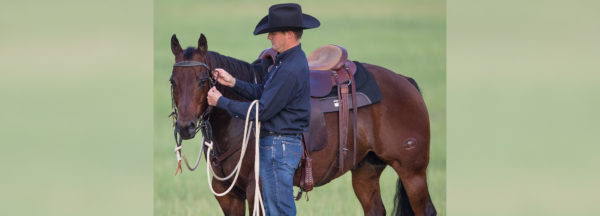
When taking a horse out on the trail for the first time or riding him in an unfamiliar location, I do groundwork before getting in the saddle to make sure the horse is using the thinking side of his brain and tuned in to me. I’m setting us up for success. That’s one reason I love the mecate bridle when riding outside the arena. Instead of using a halter and lead rope and dragging around an extra piece of equipment, you can use the mecate to get the horse’s feet moving.
On average, during a routine training session, I’ll do 30 to 45 minutes of groundwork and then 45 minutes to an hour of riding. Once the horse knows all of the exercises from the Fundamentals, Intermediate and Advanced Series, you don’t necessarily need to do a lot of groundwork before you get on.
In fact, at the ranch, if a horse is at that level in his training and is being ridden every day, we don’t do any groundwork at all. Instead, once every couple of weeks, we’ll spend a few minutes before a ride brushing up on it.
But, when you change environments or circumstances, like riding a horse outside of the arena for the first time, it’s wise to spend a good half hour on groundwork, checking that he’s tuned in to you and not fresh and full of beans.
