Training Tip: Rollbacks on the Fence Issue
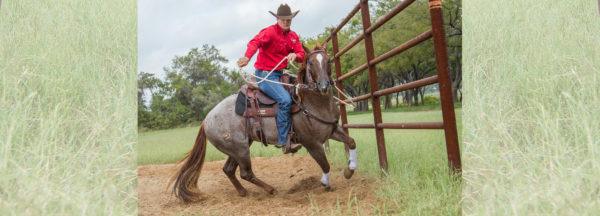
Question: When we’re doing rollbacks on the fence, my horse, Austin, a 4-year-old Appendix Quarter Horse, will stick his head over the fence rather than tucking it in and stopping. The fence is 5-feet high and sturdy, and even when he has bumped his nose against it a few times he still has trouble rolling back over his hocks. He is generally very heavy on his front end. What would you suggest? – Crazycat
Clinton’s Answer: Rollbacks are an excellent exercise to get a horse to work off his hind end rather than his front end. The problem you’re having is the reason I recommend using a sturdy, 6-foot high fence. I don’t want the horse to get into the habit of lifting his head over the fence, pushing into it with his chest, etc. I realize that it may be impossible to find a 6-foot high fence to work with. If your horse does try to get his head up and over the fence, ignore the behavior and redirect his feet. Let the horse know that he doesn’t have time to be putting his head over the fence because he’s too busy hustling his feet and going the other direction. You’ll find that the problem will just correct itself.
However, if you have been practicing the exercise for a while and the horse still continues to stick his head over the fence, abort the rollback and immediately bend him around with the same rein you were guiding his nose with. Try to make it a smooth transition—don’t jerk on the rein. Add your leg and bend him around at the walk, softening him to your inside rein and leg. Once you’ve softened him for two or three circles, canter him off in the same direction you were about to roll him back into. You’ll probably have to do this correction more than once so that he starts associating the rein with softening rather than being stiff and resisting. Eventually he’ll stay soft through the rollback rather than being stiff.
Also, keep in mind that while all horses are capable of doing a rollback, a lanky, Thoroughbred-type horse probably isn’t going to roll back as well as one of my reiners or cow horses that are bred to work off their hindquarters. You have to take your horse’s physical ability into account.
Have a horsemanship question or looking for more training tips? Check out the No Worries Club.
