Training Tip: Forget an Abused Horse’s History
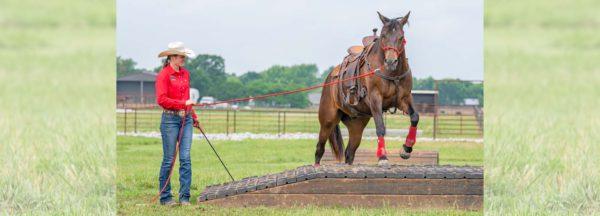
The biggest pitfall people run into when working with rescued horses and horses that have been abused or mistreated is dwelling on the horse’s past. The very first thing I do when I get a horse in for training is to forget about his past and focus on his future. Regardless of a horse’s history, every horse’s training starts at the very beginning of the Method.
Now, of course, if the horse has been badly abused, it might take a little bit longer to do some of the exercises. For example, let’s say you’re working with a horse that was beaten with a whip. When you go to desensitize him to the stick and string, he’s probably going to be frightened of it. It’ll likely take longer to build his confidence, but ultimately, the Method doesn’t get changed.
After two to three months of consistent training, every horse ends up in the same place. When I trained horses for a living in Australia, I’d have horses come to me that had severe problems—from bucking and rearing to being hard to catch and aggressively going after their owners. When the owners would drop their horses off, I’d always ask them about their horse’s history. To be perfectly honest, I was mostly just being polite. I say that because if you spend any time at all training horses for the public you quickly figure out that when people drop a horse off for training, they underestimate all of the bad stuff the horse does and over exaggerate all of the good stuff he does. Ultimately, it didn’t matter what they told me, I was going to do my own safety check with the horse anyway.
My safety check of course was starting the Fundamentals groundwork exercises, beginning with roundpenning. I did nothing but groundwork with all of the horses for at least the first seven days I had them in training. By the time I started riding them, all of the bad behavior had disappeared because I’d gotten all of the fear out of the horses and had earned their respect and trust on the ground.
Looking for more training tips? Check out the No Worries Club. Have a training question? Send it to us at [email protected].
